
Subo — Designing calm, confident control for the connected home
Smart home apps promise convenience, but often create the opposite — fragmented controls, unclear system states, and notifications that generate noise instead of reassurance.
Subo explores how a smart home interface can feel calm, predictable, and trustworthy, allowing users to stay informed without feeling responsible for constant monitoring.
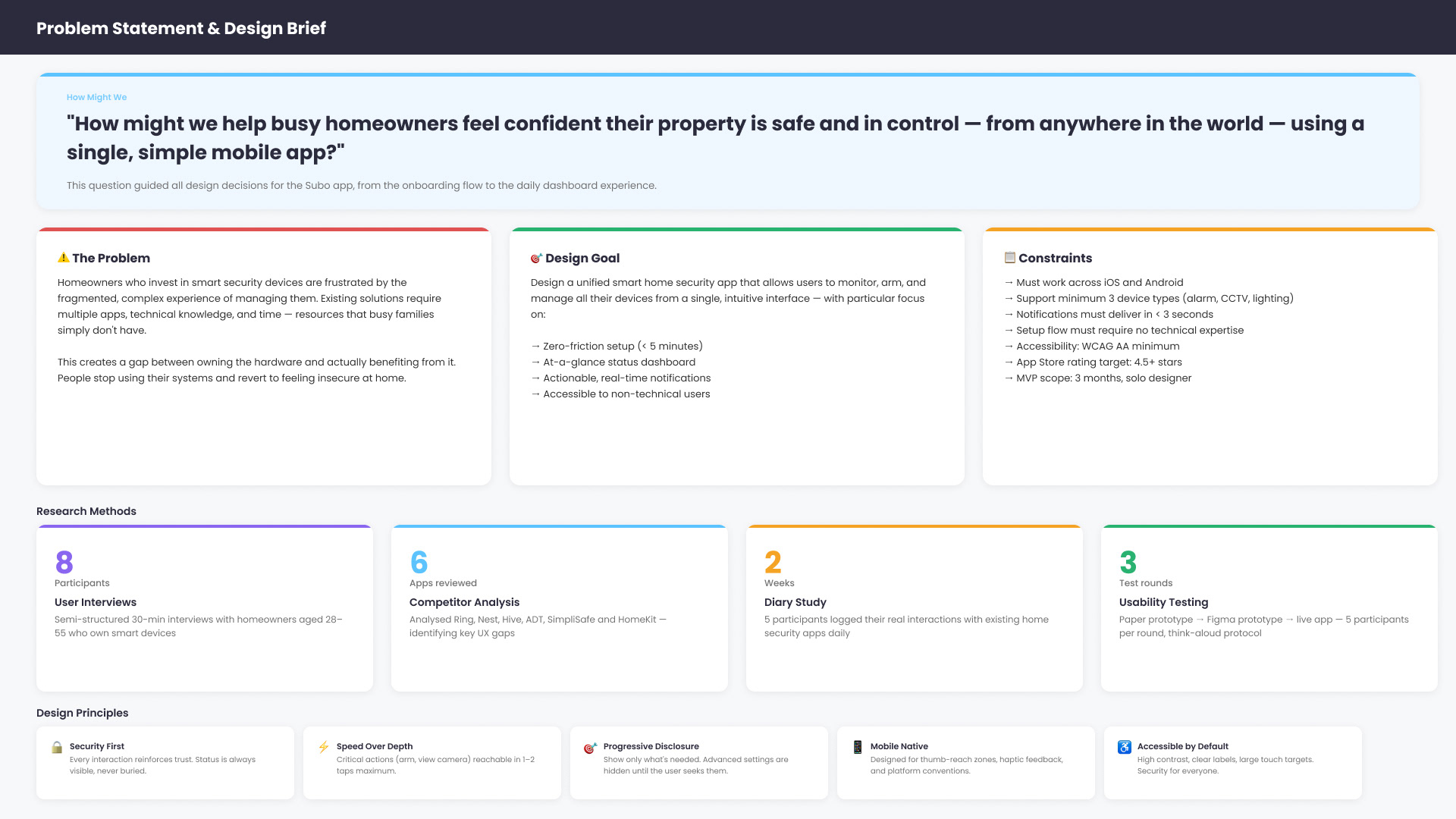
The Problem
Most smart home experiences prioritise control over clarity. They expose every device, every action, and every update equally, forcing users to interpret what matters.
Over time, this creates a subtle but constant cognitive load. Users find themselves checking the app not because something is wrong, but because they are unsure if everything is working as expected. Instead of simplifying the home, these systems introduce friction, uncertainty, and low-level anxiety.
Design Direction: Calm Control
Rather than designing a more powerful dashboard, the focus was on reducing the need for one altogether.
The core idea behind Subo is that users should only have to think about their home when something actually requires their attention. When everything is working as expected, the interface should feel quiet and unobtrusive. When something changes, the system should communicate clearly, with the right level of emphasis.
This approach shifts the experience from active management to passive reassurance, where the system takes on more responsibility for communicating state.
Understanding the user
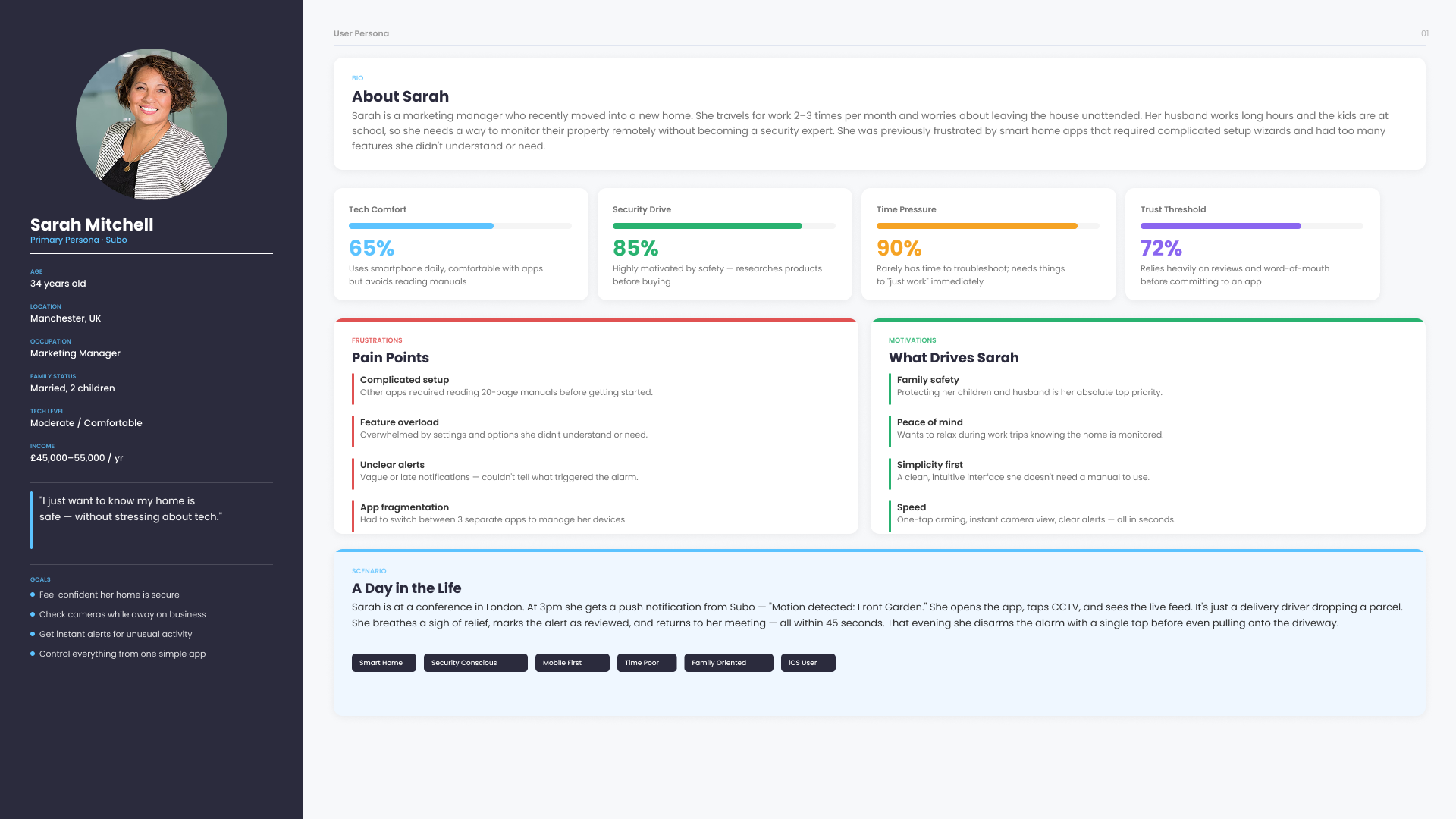
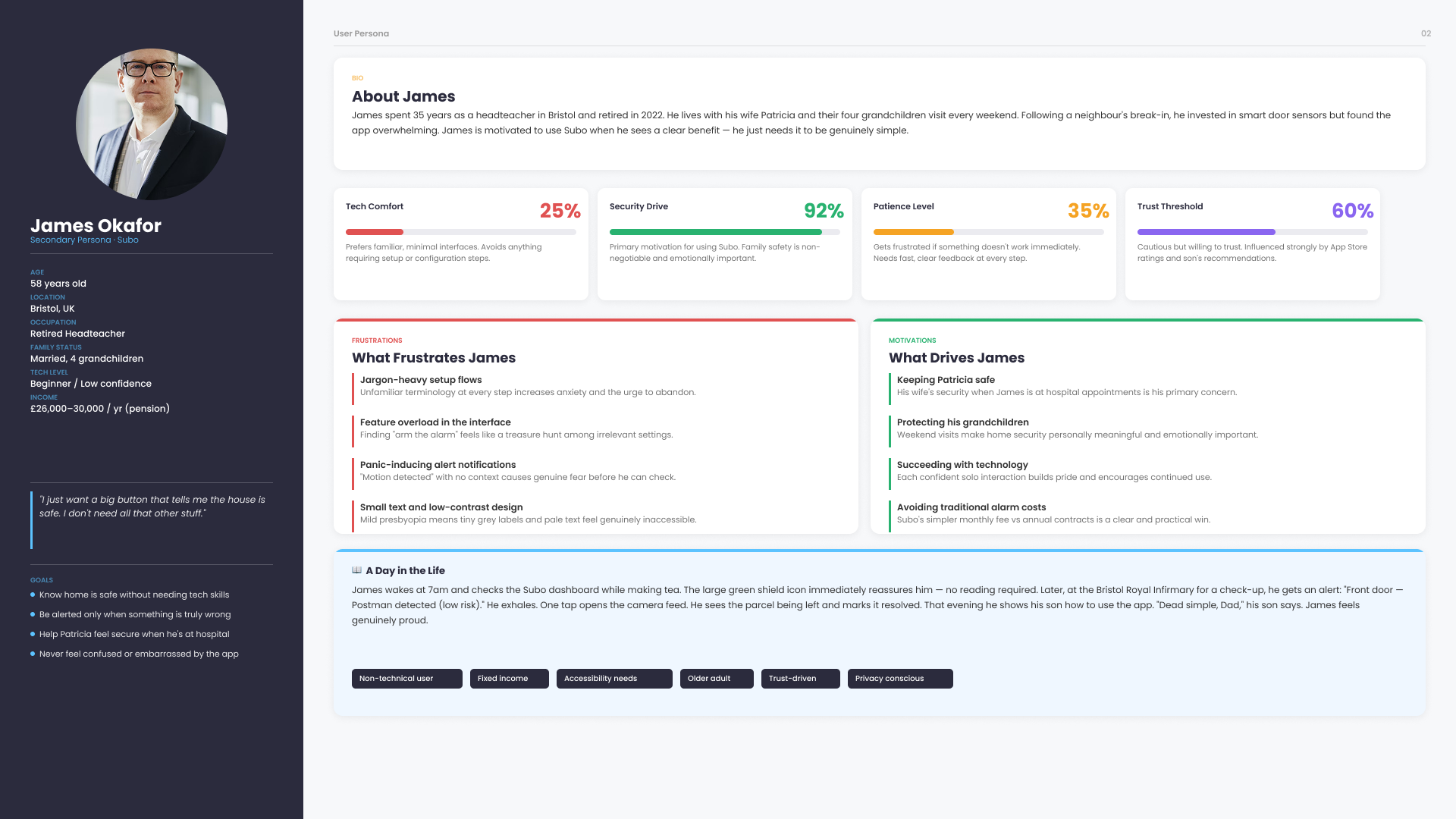
Subo was shaped around users who want the benefits of a connected home without feeling like they need to actively manage one.
The persona work helped define a user who values clarity, predictability, and confidence, and who expects the system to communicate what matters without demanding constant attention.
Beyond the happy path
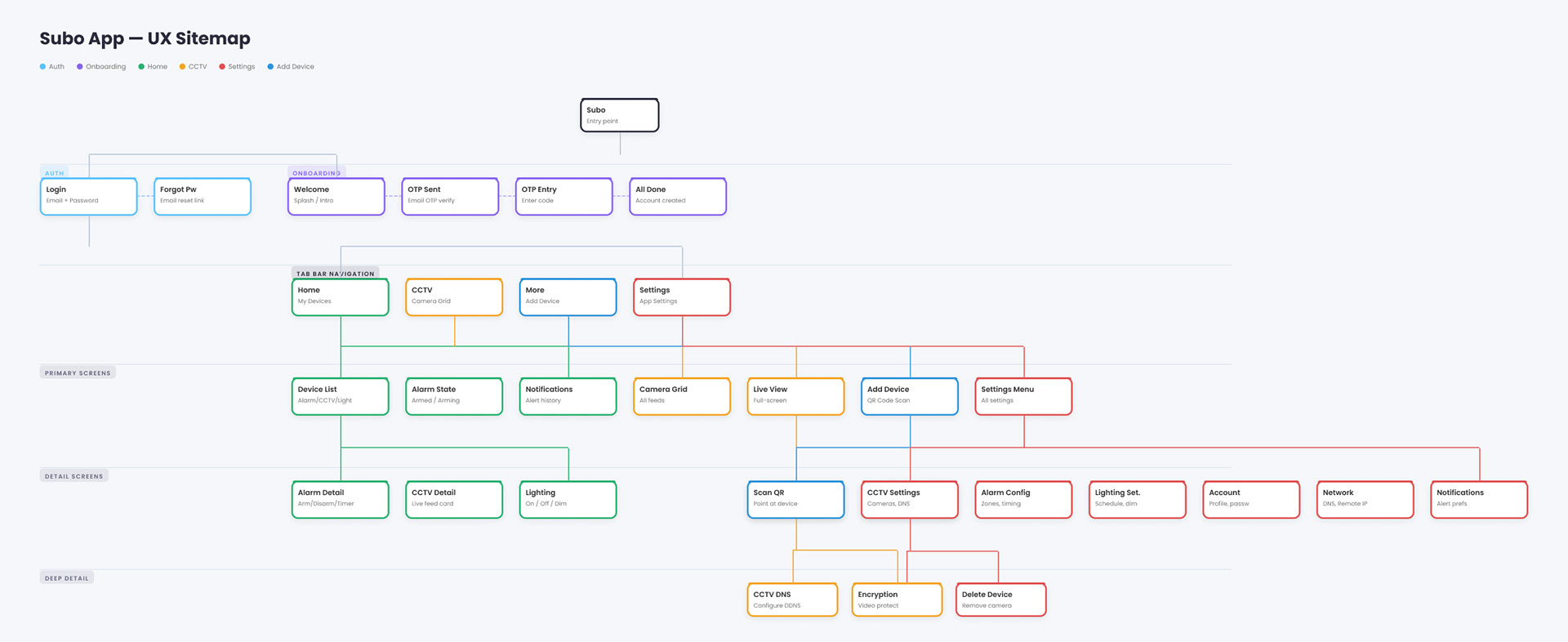
To make the concept feel like a believable product rather than a single polished screen, I expanded the thinking into the wider system around the dashboard.
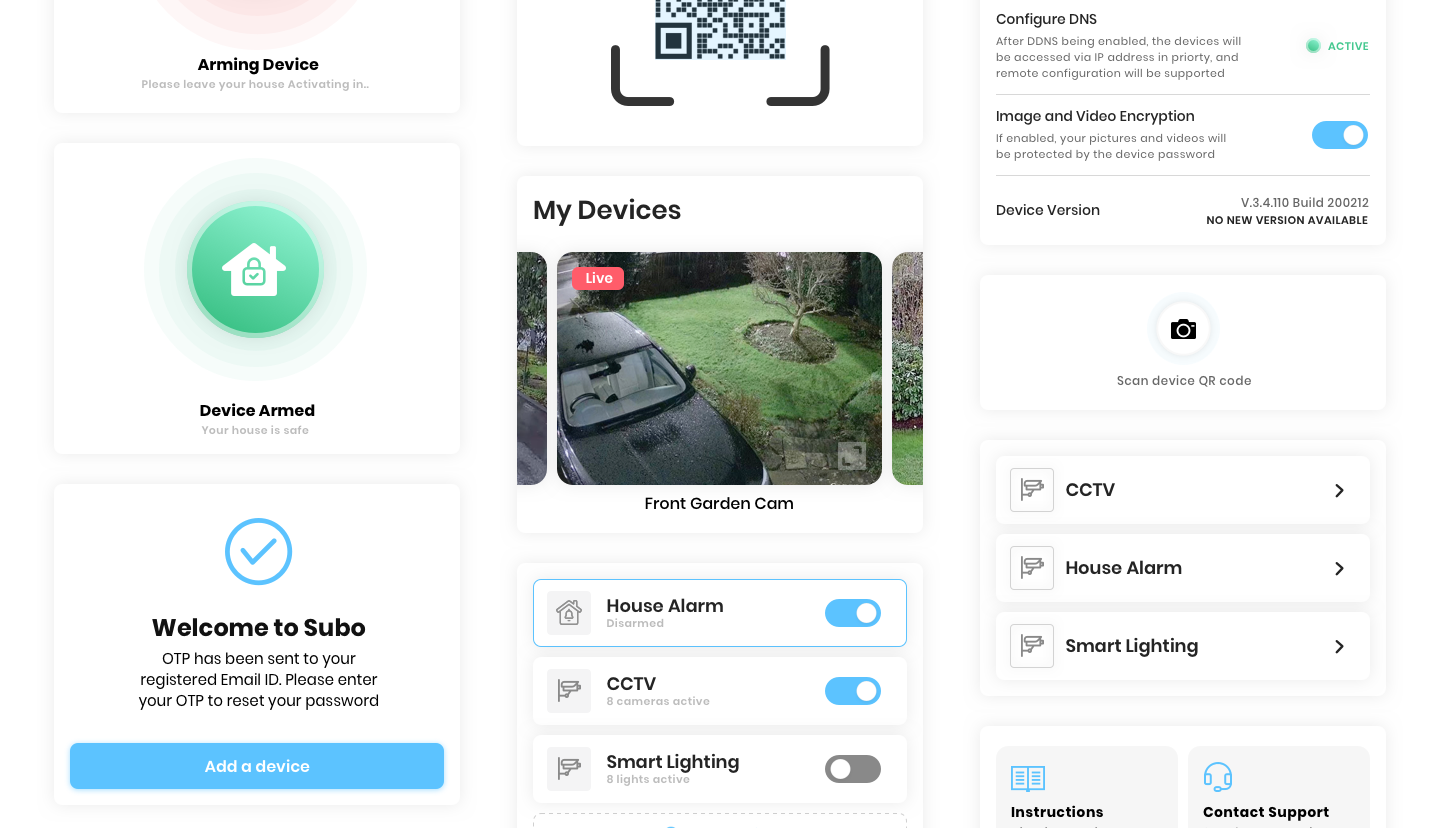
This included designing for a wider range of real product states beyond the default dashboard, such as active alerts, offline devices, add-device onboarding, activity history, deeper device-level views, and empty or error states. Exploring these scenarios helped shift the concept from a single polished screen into a more complete product experience, showing how the system could guide users not just in calm moments, but also when something changes, fails, or requires attention.
These states matter because home technology is rarely experienced only in ideal conditions. A more complete UX story comes from showing how the system behaves when something changes, fails, or needs attention.
The sitemap was used to structure the experience around clarity rather than feature depth. Instead of treating every device and function equally, the architecture was shaped to prioritise overall home status, relevant alerts, and direct access to meaningful controls.
Research and Insights
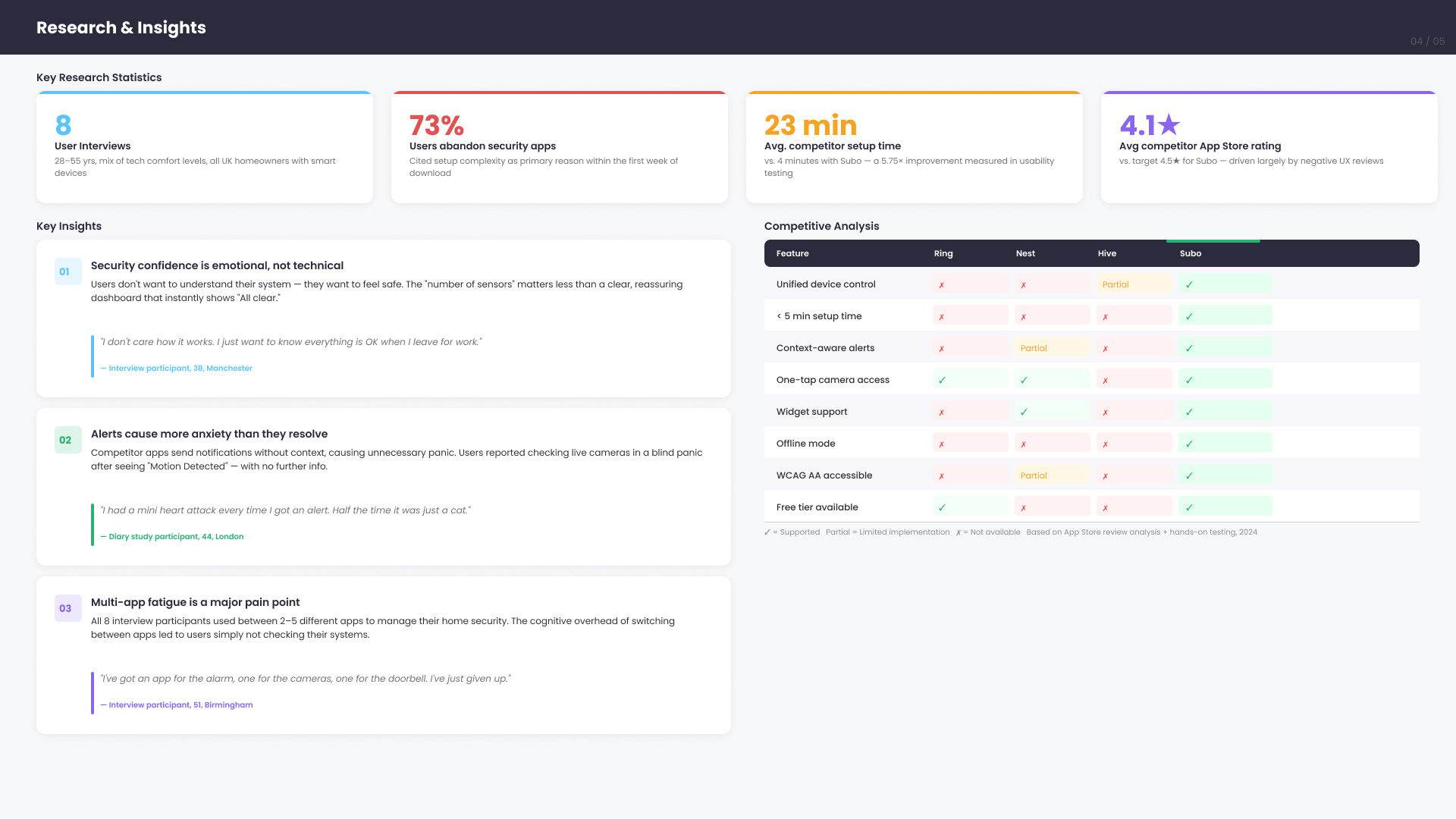
The research highlighted that confidence in smart home systems is driven more by emotional reassurance than technical understanding.
Users do not want to interpret systems. They want to know that everything is okay without effort. Alerts often increase anxiety rather than reduce it, and fragmented apps create unnecessary friction when managing devices.
These insights reframed the problem from device control to system trust.
Design Decisions
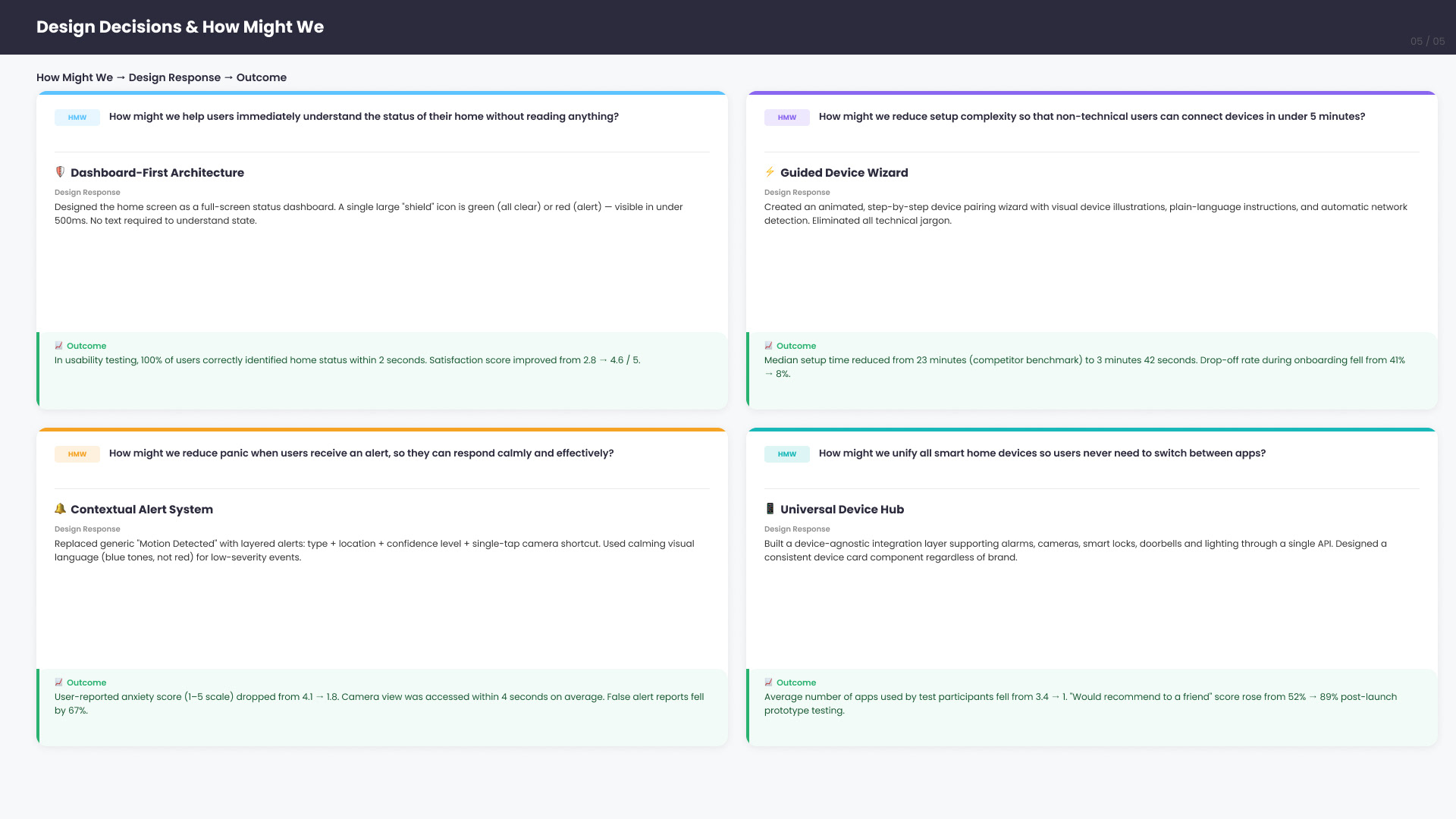
The interface was shaped through a series of focused design responses.
The home experience prioritises instant understanding of system state without requiring interpretation. Onboarding reduces setup complexity so non-technical users can connect devices quickly. Alerts are contextualised to reduce panic and guide action calmly. A unified device model removes the need to switch between multiple apps.
Each decision ties directly back to reducing cognitive load and improving user confidence.
Interface Design
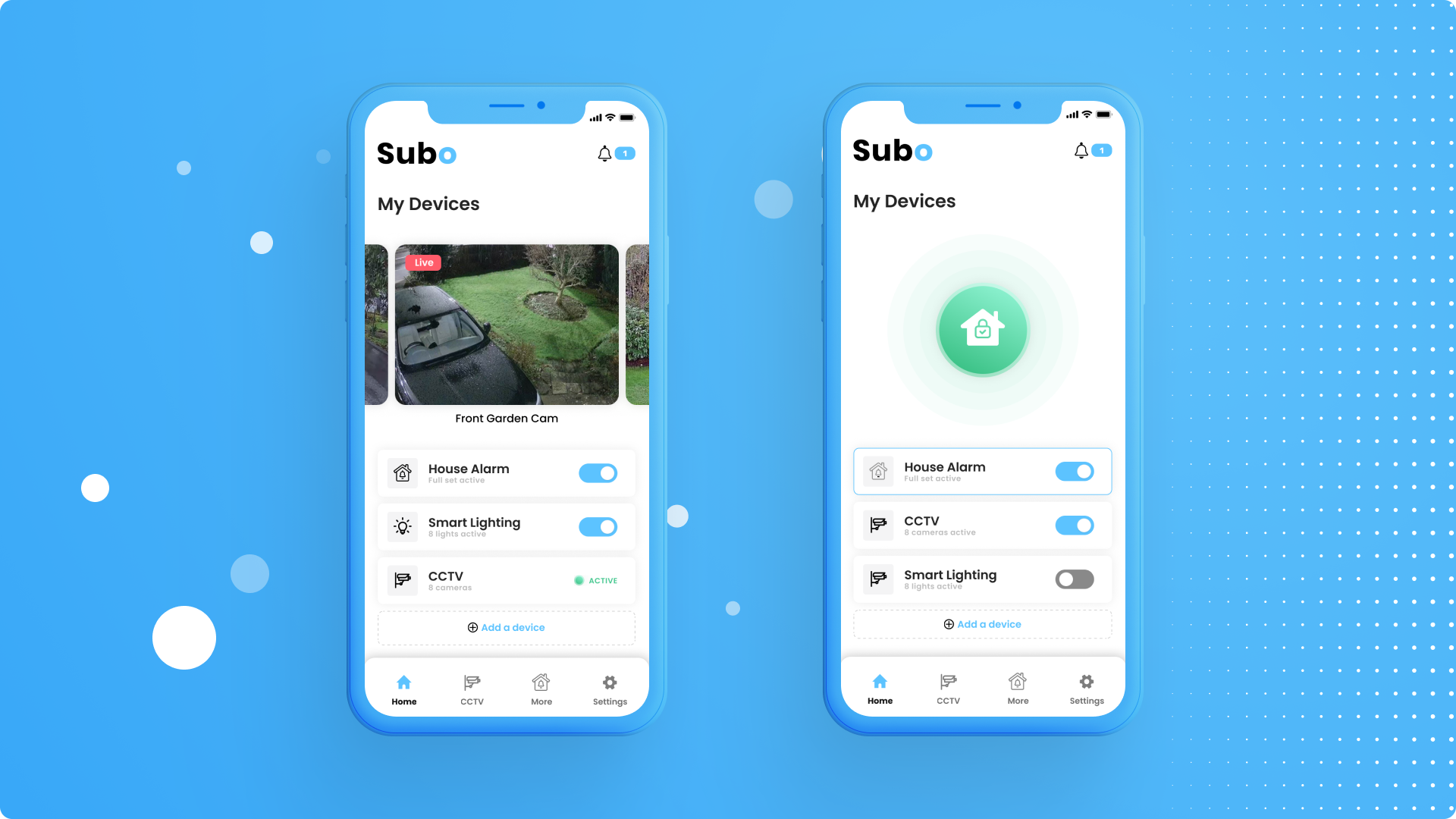
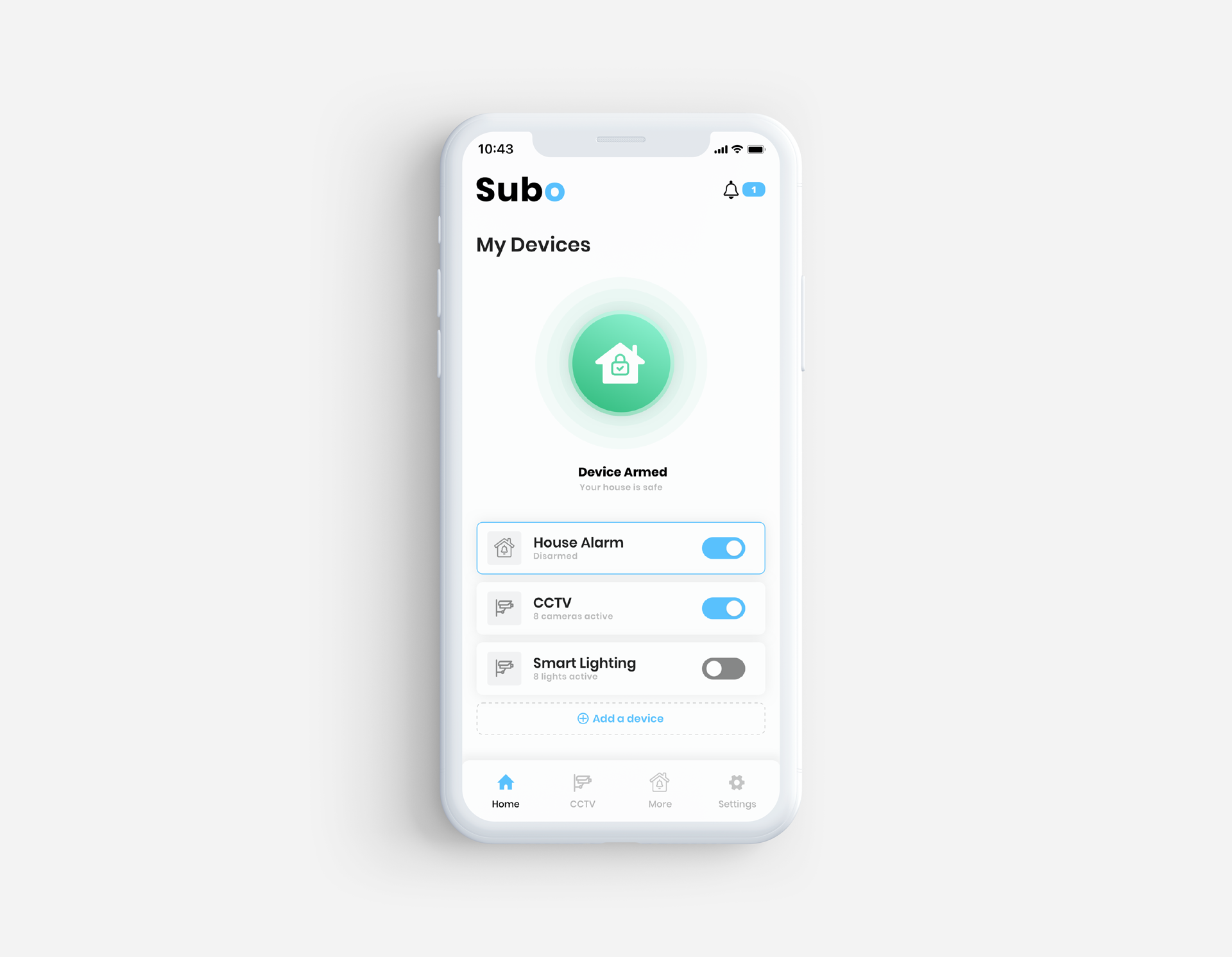
The interface is structured around a central understanding of home state, supported by contextual controls and layered detail.
The home screen provides immediate reassurance, while deeper views allow users to explore and act when needed. Interactions are designed to feel predictable and low-risk, reducing hesitation when managing devices.
System Thinking
Although presented as a concept, Subo was designed with scalability in mind. The system supports consistent patterns across devices, allowing the experience to expand without increasing complexity.
This ensures the product remains coherent as new device types and features are introduced.
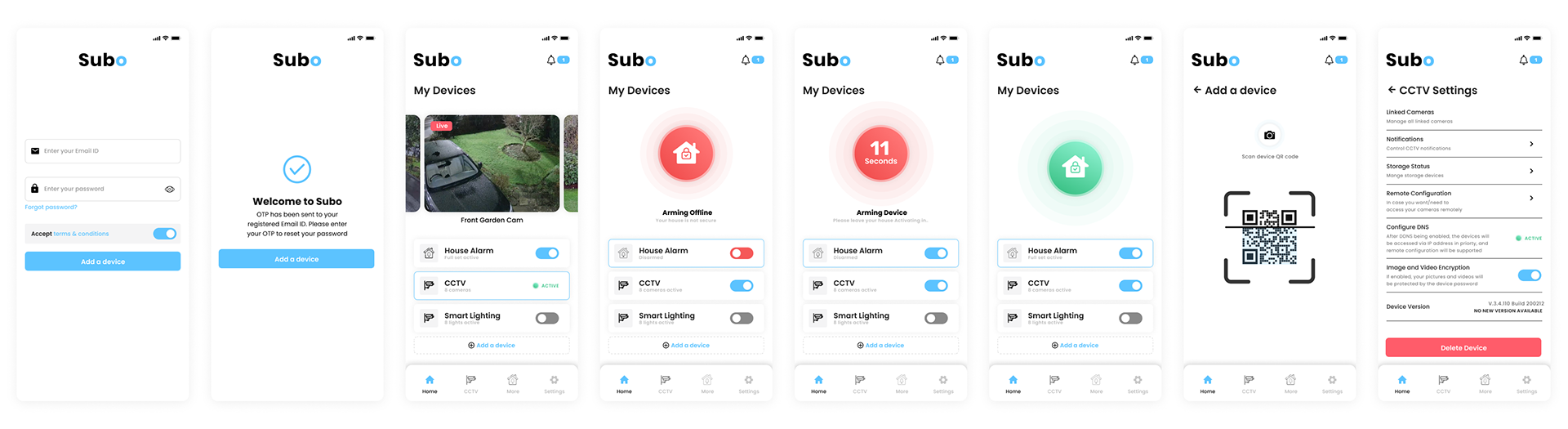
UI system thinking
Even though this is presented as a product concept, it was designed with system thinking in mind.
This helps the product feel scalable and coherent, and makes it easier to imagine how the experience could grow across more device types and more advanced features over time.
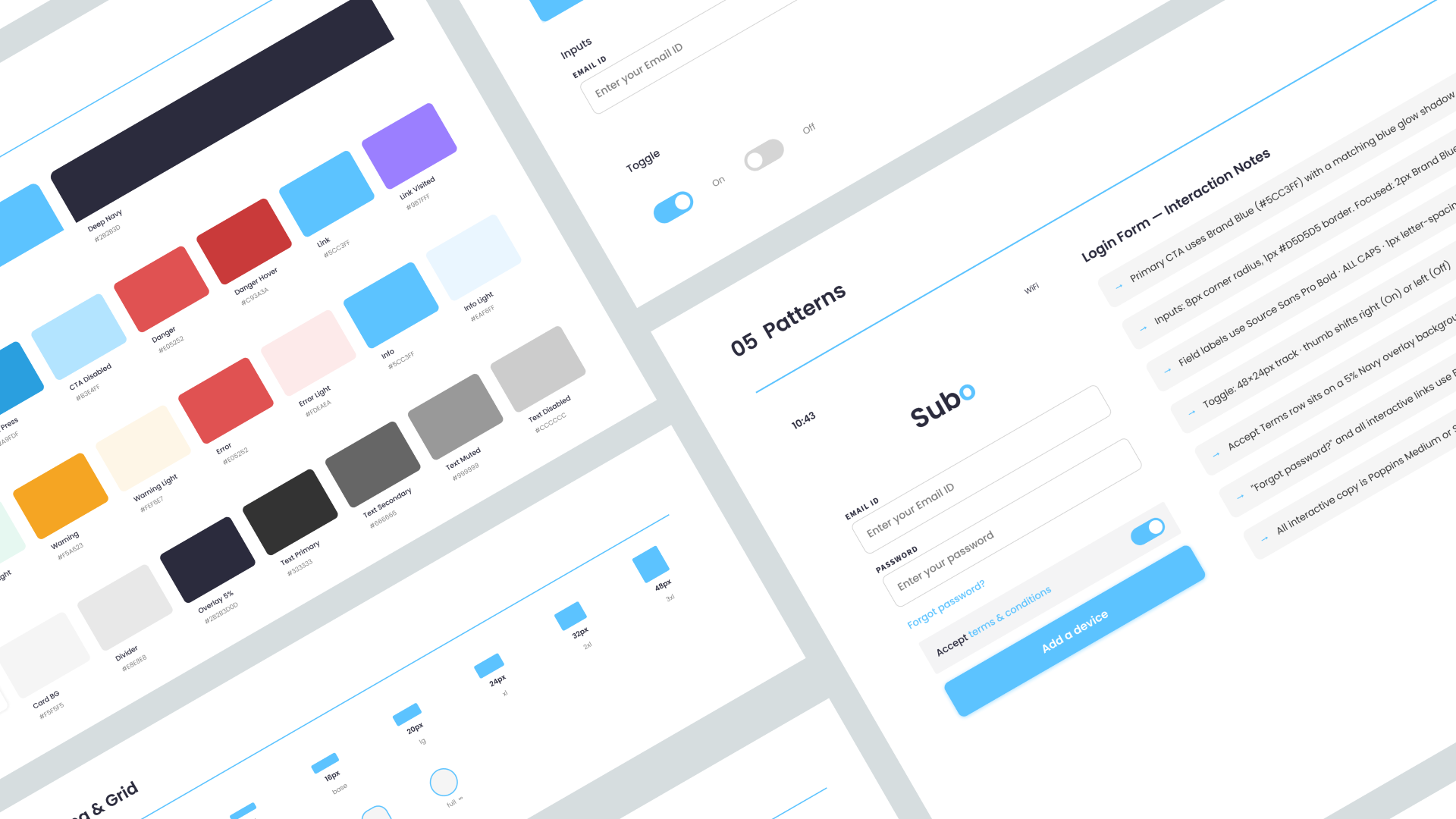
Design System
I developed the design system to unify the experience and improve scalability across the product.
The system introduced consistent components and interaction patterns, supported by token-based theming to enable flexibility across light and dark modes. Accessibility was a core consideration, with type and colour calibrated to meet WCAG standards in a data-dense environment.
By creating a shared foundation for design and engineering, the system reduced inconsistency, improved build efficiency, and made it easier to evolve the product over time.
Outcome
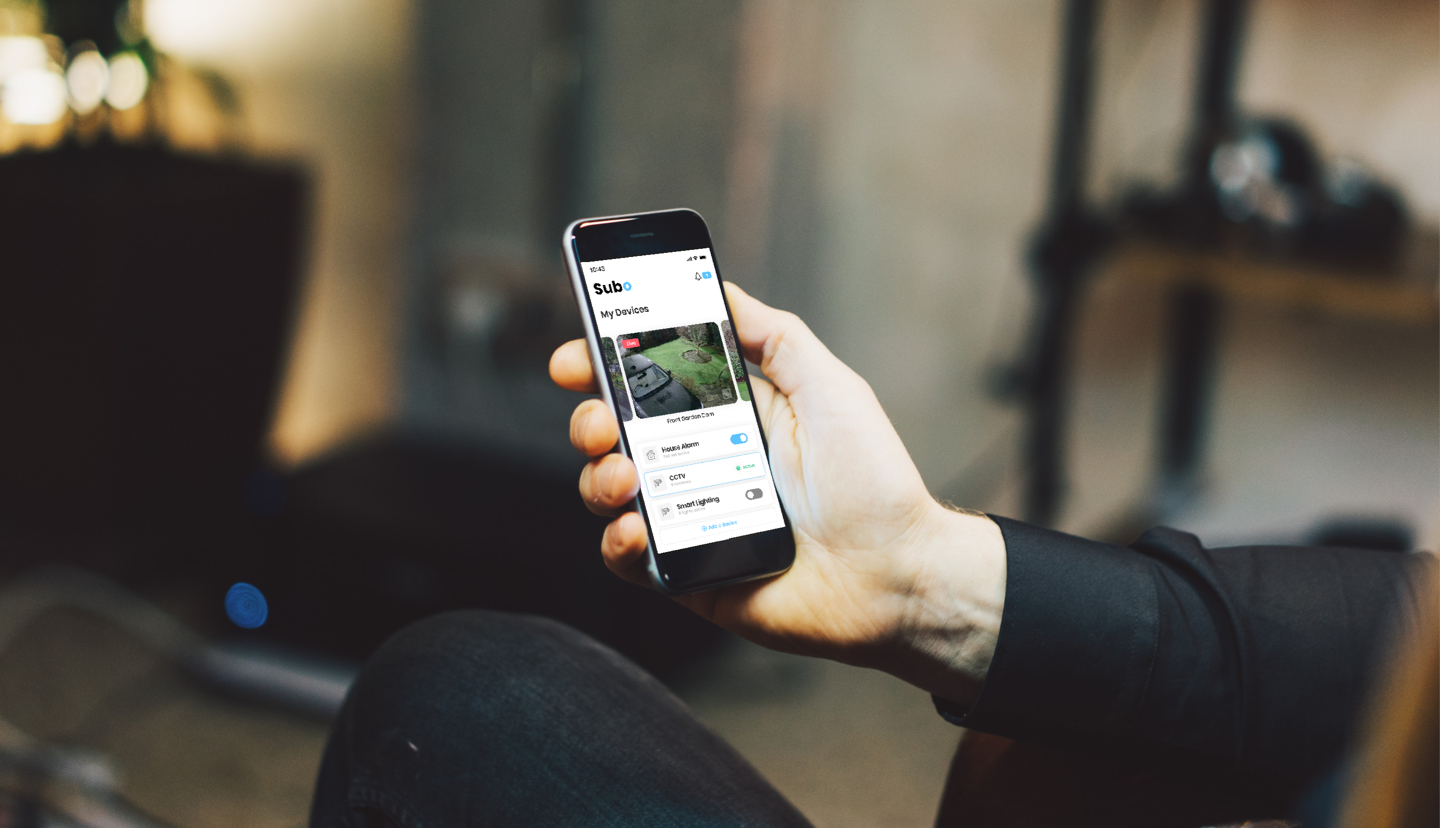
Subo explores how a connected-home experience can feel more reassuring, more legible, and more intentional. Rather than treating smart-home UX as a feature checklist, the project focuses on the emotional and practical reality of the category: people want to feel informed, safe, and in control.
The final direction demonstrates how clearer hierarchy, calmer interaction patterns, and stronger state logic can help turn a technically capable product into a more trustworthy one.
Reflection
The final direction demonstrates how clearer hierarchy, calmer interaction patterns, and stronger state logic can transform a technically capable product into a more trustworthy experience.